
The California College Maze
Why UC, CSU, Private, and Out-of-State Choices Are No Longer Simple
Written By DCP Blog Guest Author Ramaraju Kalidindi · on July 15th, 2026 · 12 min read

Table of Contents
The California College Maze
They say California is the land of opportunity.
And in many ways, it is.
A place where a child can grow up in Fremont, Irvine, San Jose, Pleasanton, Cerritos, Cupertino, or San Diego and believe that the road ahead is straightforward: work hard, select the appropriate courses, achieve excellent grades, write good essays, and a prestigious college will welcome you.
For many immigrant families, especially Indian first-generation families, this promise feels almost sacred.
Parents immigrated here because America presented a deal: if you dedicate yourself to studying, if you make sacrifices, if you maintain discipline, the system will reward you. Not always effortlessly. Not always swiftly. But eventually.
This conviction shaped lives.
It paid mortgages. It funded tutoring. It filled minivans with Kumon folders, violin cases, cricket kits, debate trophies, and Costco snacks between AP classes.
But somewhere along the way, the college process changed. The traditional map remains, yet the routes have become congested. The signs are perplexing. Some exits are inaccessible. Certain lanes appear open until one realizes they are only available to specific majors, specific campuses, or institutional priorities that no family can discern from the outside.
California continues to boast one of the most remarkable public higher education systems globally. Yet for families attempting to navigate it, it may feel less like a system and more akin to a labyrinth.
The Promise California Built
To understand the maze, you must revisit the promise.
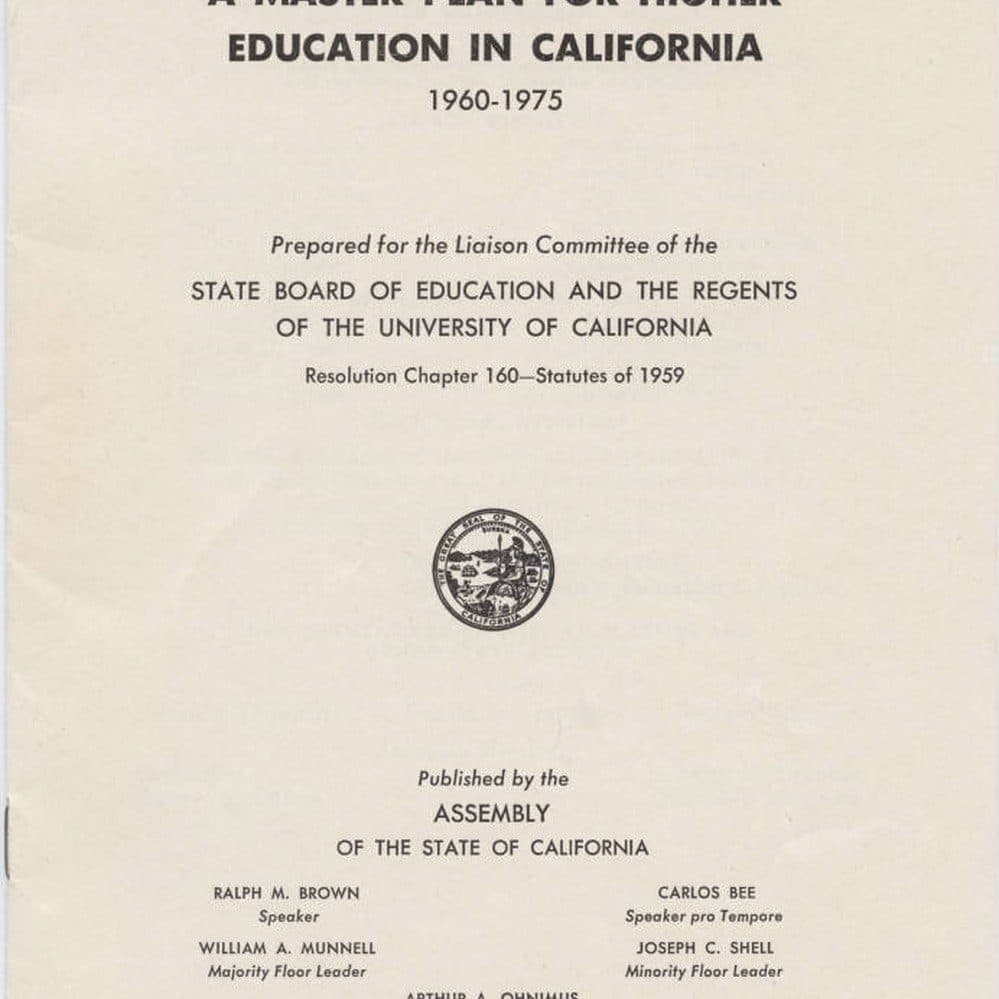
In 1960, California created the Master Plan for Higher Education. It was one of the most ambitious educational ideas in modern American history.
This plan divided public higher education into three distinct pathways:
The University of California would serve the top 12.5% of California high school graduates. The California State University system would serve the top third. The California Community Colleges would remain open to anyone who could benefit from instruction.
The plan was elegantly structured: UC would be the research engine, while CSU would be the practical workforce engine, and community colleges would be the open door.
Collectively, they established a unique public system that embraced the idea that excellence and accessibility could coexist harmoniously.
For an extended period, this promise was sufficiently clear for families to grasp. If you were a strong student in California, you had a place. Maybe not every place. Maybe not the dream campus. But a place. You had an opportunity.
That distinction was significant.
Currently, many families still perceive the initial part of the promise while overlooking the latter.
Yes, the UC system still offers broad access to qualified California students. However, this does not guarantee admission to UCLA. It does not ensure a spot at Berkeley. It does not imply acceptance at San Diego. It does not guarantee admission to computer science at Irvine. It does not promise engineering at the nearest campus. The system may uphold its promise while simultaneously disappointing a student.
The system can keep its promise and still break a student's heart.
The Difference Between "A UC" and "The UC You Want"
This is a point where many families find themselves taken aback.
A student may be strong enough for the UC system and still not get into the UC campus they imagined. That sounds unfair until you look at the math.
For the Fall of 2025 term, UC Berkeley received over 126,000 applications from first-year students and admitted approximately 11.4% of applicants. Similarly, UCLA has also been sitting in the single-digit admission rate range. At that level, gaining admission is no longer just about being qualified.
It becomes a matter of capacity.
A campus only has a limited number of seats. A major only has so many lab sections. A department only has so many faculty members. A first-year class only has so much room.
For Indian families, this is often the hardest part to accept because the home logic is usually clean and moral: if a child has put in the effort, they should receive recognition.
Emotionally, this perspective is understandable. However, the admission process does not function like a family unit.
The student may have a valid ticket. The student may have arrived on time. The student may even be dressed properly and carrying the right bag. But if the train is full, the train is full.
That is the brutal part.
Not cruel. Not personal. But brutal.
The Parent Version of the Maze
For numerous parents, the college selection process often starts with well-known institutions.
UCLA. Berkeley. Stanford. USC. Ivy League. Maybe a few "safe" UCs.
But California admissions does not reward brand-name thinking. It rewards system thinking.
A smart college list is not a trophy shelf. It is a transportation plan.
You need fast roads. You need backup roads. You need affordable roads. You need roads that still get your child where they want to go, even if the original route is closed.
This is the reason why the discussion in California must encompass UC, CSU, private colleges, out-of-state public universities, and community college transfer pathways. Not because every student must apply to all institutions. But because every family needs to comprehend the purpose of each educational pathway.

UC: The Research Lane
The UC system is built for research, theory, academic depth, graduate preparation, and high-level intellectual exploration.
It is particularly suitable for students aiming to enter fields such as engineering, biology, economics, public health, data science, political science, neuroscience, environmental science, and pre-medical studies.
However, it is important to note that not all UC campuses are identical.
Berkeley and UCLA are not simply "better versions" of every other UC. They are different ecosystems. UC Davis has strengths that may better serve one student. UC Irvine may fit another. UC Riverside may offer opportunity and support that a hyper-competitive campus cannot. UC Merced, still young, may give certain students room to grow in ways a crowded campus may not.
Families often ask, "Which UC is the best?" The better question is: best for what kind of student, in which major, at what cost, and in what emotional environment?
A college is not a ranking. It is a four-year habitat. And the wrong habitat can make even a bright student feel small.
CSU: The Practical Powerhouse Many Families Underestimate
In many Indian households, CSU does not always get the respect it deserves. That is a mistake.
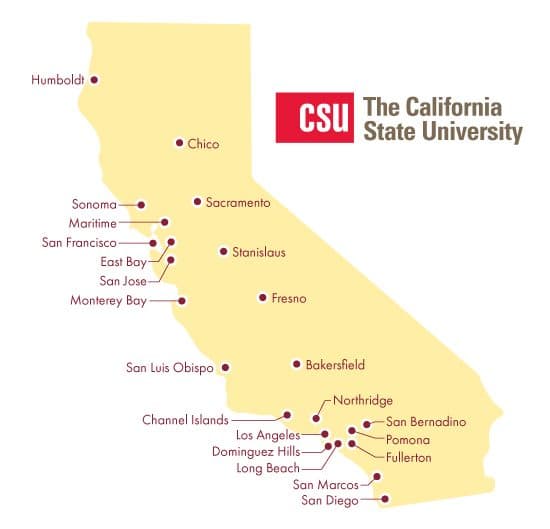
The CSU system was established with a distinct purpose. It emphasizes teaching, is more professionally oriented, and is frequently more closely linked to the workforce in California.
For students interested in business, nursing, teaching, engineering technology, computer information systems, applied sciences, hospitality, criminal justice, communication, and many practical career pathways, CSU can be an outstanding option.
Institutions like Cal Poly San Luis Obispo, San Diego State, San Jose State, Long Beach State, Fullerton, Pomona, and others have strong programs that can result in excellent career outcomes.
San Jose State, for example, sits in the shadow of Silicon Valley. That geography matters. Internships, alumni networks, and employer pipelines do not always follow prestige rankings. Sometimes they follow highways.
A student studying computer science or engineering near the Bay Area may find an opportunity not because a college name impresses a dinner guest, but because it's easy for recruiters to look there.
Parents sometimes ask, "But is it prestigious?" A more useful question is: will it help the student become skilled, employed, and confident, and avoid being buried in unnecessary debt?
Prestige is nice. Employment is nicer.
Private Colleges: Smaller Rooms, Bigger Price Tags, Sometimes Better Fits
Private colleges are harder to generalize.
Some are elite and globally known. Some are small and nurturing. Some give generous merit aid. Some are expensive but deeply supportive. Some are not worth the price for a particular student.
For a California family, private colleges should not be treated as automatically superior or inferior. They should be treated on a case-by-case basis.
A private college may make sense if it offers: strong merit scholarship money, a smaller learning environment, direct access to professors, a unique major, a strong alum network, or a better emotional fit for the student.
This matters especially for students who may be strong but not loud.
Not every child thrives in a lecture hall of 500 attendees. Not every student wants to compete for office hours. Not every teenager is ready to become their own academic manager at eighteen.
Some students need intimacy and thrive in a more personal atmosphere.
The best college is not always the hardest one to enter. Sometimes it is the one where the student can finally breathe and take things seriously.
Out-of-State: Adventure, Escape, or Expensive Detour?
Out-of-state colleges have a special emotional pull.
For students, they represent freedom. For parents, they represent risk. For counselors, they represent both.
An out-of-state public university can be a wonderful option, especially if it offers a strong program, an honors college, merit aid, or a campus culture that fits the student better than California options do.
But families must be careful.
Out-of-state public universities often charge much higher tuition to nonresidents. A school that looks like a "public university" may cost as much as a private one once tuition, housing, flights, and living expenses are included.
This is where emotion can quietly become expensive.
A student may say, "I just want to leave California." That is understandable.
Many students want distance. They want reinvention. They want to become themselves without running into someone from high school at Target.
But families should separate the emotional reason from the financial decision.
Leaving California can be healthy. Paying an extra $100,000 to leave California may not be worth it.
The question is not, "Is out-of-state good or bad?" The question is: what are we buying that we cannot get in California?
If the answer is a rare program, a generous scholarship, a clear career pathway, or a better personal fit, the choice may be worth it. If the answer is only a sweatshirt and a football stadium, think twice.
Community College: The Door Smart Families Should Not Dismiss
Among some immigrant families, community college carries a stigma.
It is seen as a fallback. A failure. A sign that something went wrong.
That view is outdated.
In California, community college can be one of the most strategic pathways in the entire system.
Through the Transfer Admission Guarantee program, eligible California community college students can secure guaranteed admission to one of six participating UC campuses if they meet specific requirements. CSU also has structured transfer pathways, including the Associate Degree for Transfer.
This is not a loophole. It is part of the architecture.
California built community colleges not as dead ends, but as second doors.
For some students, especially those who mature later, need to save money, want another chance at academic focus, or were squeezed out of first-year admissions, transfer can be a powerful route.
Two years at community college. Strong grades. Clear major preparation. Transfer to UC or CSU. Graduate with the same bachelor's degree.
Families need to hear this clearly: the diploma does not say freshman admit. It says graduate.
And in life, that difference matters less than people think.
The Indian Family Problem: Too Many Dreams, Too Few Definitions
In many Indian-American families, college is not just college. It is proof.
Proof that the parents' sacrifice was worth it. Proof that the child listened. Proof that the family belongs. Proof that America worked.
This is why admissions decisions can feel so personal.
A rejection from UCLA can feel like a judgment on the student. A waitlist from Berkeley can feel like a family failure. A CSU acceptance can feel like a disappointment when it may actually be an excellent fit.
But colleges are not moral judges. They are institutions managing scarcity.
They have budgets, majors, faculty limits, housing constraints, diversity goals, enrollment targets, and unpredictable yield models.
Your child is not being weighed on a divine scale. They are being read inside a system.
And systems must be understood before they are emotionally obeyed.
A Better Way to Build the College List
The modern California college list should not be built around ego. It should be built around layers.
Layer one: academic fit. Can the student handle the work and grow?
Layer two: major fit. Does the college actually support the field the student wants to pursue?
Layer three: financial fit. Can the family afford it without damaging long-term stability?
Layer four: emotional fit. Will the student become more confident there or more invisible?
Layer five: strategic fit. Does the list include reach, target, likely, affordable, and transfer-aware options?
A healthy, robust list should not depend on one miracle. It should have various positive outcomes.
That is the goal.
Not lowering ambition. Lowering fragility.
The New Definition of Success
There was a time when the college process resembled a ladder.
A single direction. A singular ranking. A solitary ascent.
Today it looks more like a map.
There are many routes. Some are direct. Some are scenic. Some are cheaper. Some are harder at first but better later. Some look impressive and lead nowhere. Some look ordinary and quietly change a life.
For California families, the work is not to chase every famous name. The work is to understand the terrain.
UC represents one pathway. CSU signifies another. Private colleges offer another route. Out-of-state colleges present other options. Community college transfers provide another avenue.
The smartest families do not ask only, "What is the best college my child can get into?" They ask: what is the best path for this child to become educated, employable, grounded, confident, and still themselves?
That question changes everything.
Because the goal was never just admission. The aim is to reach the destination.